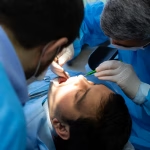
A missing tooth can change more than your smile. It can make chewing feel awkward, affect the way you speak, and slowly shift the teeth around it. This guide to replacing missing teeth is designed to help you understand your options clearly, without the jargon, so you can make a decision that feels right for your health, comfort, and budget.
For some people, the concern is mostly cosmetic. For others, it starts with a cracked tooth that could not be saved, a denture that no longer feels stable, or several missing teeth making everyday meals harder than they should be. The best replacement depends on where the tooth is missing, how many teeth are involved, the health of your gums and jawbone, and how important fixed versus removable treatment is to you.
Why replacing missing teeth matters
When a tooth is lost, the gap does not always stay quiet. Nearby teeth can drift into the space, the opposing tooth can move out of position, and the bite can become less balanced over time. That can lead to uneven wear, food trapping, and extra stress on the remaining teeth.
There is also the issue of bone loss. Natural tooth roots help stimulate the jawbone. Once a tooth is gone, that stimulation decreases, and the bone in that area can begin to shrink. This is one reason some tooth replacement options feel more stable and long-lasting than others.
Replacing a missing tooth is not only about appearance. It is often about keeping the rest of your mouth healthier and easier to maintain.
A practical guide to replacing missing teeth
Most patients considering tooth replacement are deciding between a dental implant, a dental bridge, or dentures. Each option has strengths, limitations, and different maintenance needs.
Dental implants
A dental implant replaces the root of a missing tooth with a small post placed in the jawbone. After healing, a crown, bridge, or denture can be attached to it. For a single missing tooth, an implant with a crown is often the closest option to a natural tooth in look and function.
One of the biggest advantages of implants is stability. Because they are anchored in bone, they do not rely on neighboring teeth for support, and they can help reduce bone loss in the area. Many patients also like that implants feel more natural when chewing and speaking.
That said, implants are not a same-day solution in most cases. Treatment can take several months, especially if healing time or bone grafting is needed first. They also usually involve a higher upfront cost than bridges or dentures. For many people, the trade-off is worth it because of the comfort and long-term value, but it depends on your goals and your oral health.
Dental bridges
A dental bridge fills the space left by one or more missing teeth by attaching an artificial tooth to the teeth on either side of the gap. This is a fixed option, meaning it stays in place and is not removed at night.
Bridges can be a good choice when the neighboring teeth already need crowns or when an implant is not the best fit medically or financially. They typically take less time than implants and can restore chewing ability and appearance very effectively.
The main trade-off is that a traditional bridge often requires reshaping the supporting teeth. It also does not replace the tooth root, so it does not provide the same bone support as an implant. With good care, bridges can last many years, but they do require careful cleaning around and under the replacement tooth.
Partial and full dentures
Dentures remain a reliable solution for many patients, especially when several teeth are missing or when full-arch replacement is needed. A partial denture replaces some teeth and usually clips around the remaining natural teeth. A full denture replaces an entire upper or lower arch.
Modern dentures can look much more natural than many people expect, and they can restore appearance and function at a lower initial cost than implants. They are also less invasive, which matters for patients who want to avoid surgery.
The challenge is that removable appliances can take some getting used to. Lower dentures, in particular, may feel less stable than patients hope. Over time, changes in the jawbone can also affect fit, which is why relines or adjustments are sometimes needed. For some patients, implant-supported dentures offer a middle ground by combining the coverage of a denture with the added retention of implants.
How to choose the right tooth replacement option
The right choice is rarely about one feature alone. It is usually a balance of function, comfort, appearance, treatment time, and budget.
If you want the most natural feel and a solution that can help preserve bone, an implant is often the strongest option. If you want a fixed restoration without surgery, a bridge may make more sense. If you are replacing multiple teeth and need a more affordable or less invasive approach, dentures may be the practical answer.
Age by itself does not rule out treatment. Seniors can be excellent candidates for implants, bridges, or dentures, depending on their overall oral health. Younger adults may prioritize preserving adjacent teeth and long-term function. Busy working adults often want the option that fits their schedule and avoids repeated emergencies from unstable or worn restorations.
This is also where an in-person exam matters. X-rays, gum health, bone levels, bite alignment, and the condition of nearby teeth all shape the recommendation. What works beautifully for one patient may not be the best choice for another.
What if you have been missing a tooth for a long time?
You still have options. Even if a tooth has been missing for years, treatment may still be possible. The main issue is whether the bone and gum tissue in that area can support the replacement being considered.
For implants, long-term tooth loss can mean less available bone. In some cases, bone grafting can rebuild support before implant placement. That adds time to the process, but it can make treatment possible when it otherwise would not be.
For bridges and dentures, the timeline may be simpler, but the surrounding teeth and tissues still need to be assessed carefully. Waiting does not always remove your options, but it can change them.
Cost, maintenance, and long-term value
Patients often ask which option is cheapest, but a better question is which option gives the best value for your situation. Dentures usually have the lowest upfront cost. Bridges are often somewhere in the middle. Implants tend to cost more initially but may offer more long-term stability and fewer compromises, especially for single-tooth replacement.
Maintenance matters too. Implants still need brushing, flossing, and regular exams. Bridges require special attention under the artificial tooth. Dentures need daily cleaning and periodic fit checks. No option is maintenance-free.
If cost is a major concern, ask about phased treatment or financing. Many patients move forward more comfortably when they understand both the short-term expense and the likely long-term maintenance involved.
For anxious patients, comfort matters too
A lot of people delay treatment because they are nervous about dental work, especially when surgery or extractions are part of the plan. That is common, and it should not stop you from getting care.
Clear explanations, a calm environment, and options for sedation can make a big difference. Whether you need a simple bridge consultation or a more involved implant plan, feeling informed and supported matters just as much as the treatment itself. A good dental team will walk you through the process step by step and help you understand what to expect before anything begins.
Questions to ask at your consultation
Before choosing treatment, it helps to ask a few practical questions. How long will this option last with good care? Will it feel fixed or removable? How will it affect nearby teeth? What kind of maintenance will it need? If bone loss or gum disease is present, does that need to be treated first?
These questions can bring the conversation back to your real priorities. Some patients want the longest-lasting option. Others want the most affordable path to eating comfortably again. Neither approach is wrong.
At Burnaby Square Dental, these conversations are centered on what will work best for you, not what sounds best on paper. The goal is a treatment plan that feels clear, comfortable, and realistic for your life.
Replacing missing teeth is not about chasing a perfect smile. It is about restoring comfort, confidence, and everyday function in a way that fits your needs now and supports your oral health later. If you have been putting it off, a straightforward consultation can be the first step toward making meals, conversations, and smiling feel easy again.