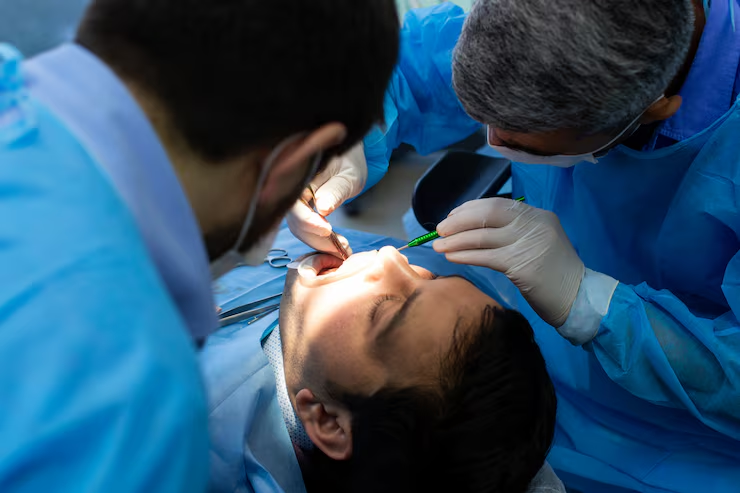
All dental problems cannot be resolved through just a filling or cleaning. An oral surgery procedure is suitable for deeply impacted teeth, misaligned jaws, and infections that have spread into the bone.
If you are searching for a dental clinic in Burnaby that residents trust for complex dental care, understanding what oral surgery involves can help you feel more prepared and less anxious about the process.
Oral surgery sounds serious, but for many patients, it is the most effective way to relieve pain, prevent further damage, and restore normal function.
What Is Oral Surgery?
Oral surgery is a branch of dentistry that deals with conditions of the mouth, teeth, jaws, and face that require surgical treatment.
It is performed by trained dental professionals — often oral surgeons or dentists with advanced surgical training. The procedures range from relatively simple tooth extractions to more complex jaw corrections.
Most people will need at least one form of oral surgery in their lifetime. The most common example is having a wisdom tooth removed.
Common Problems That Oral Surgery Can Treat
Impacted Teeth
An impacted tooth is one that cannot fully emerge through the gum. It gets stuck—either because there is not enough space or because it is growing at the wrong angle.
Impacted tooth extraction surgery is one of the most frequently performed oral surgical procedures. Wisdom teeth are the most common culprits, but other teeth, like canines, can also become impacted.
Left untreated, an impacted tooth can:
- Push neighbouring teeth out of alignment
- Causes persistent pain and pressure
- Lead to cyst formation around the tooth
- Create pockets where bacteria grow, causing infection
Surgery removes the impacted tooth carefully and cleanly, eliminating the source of the problem.
Wisdom Tooth Problems
Wisdom teeth are the last molars to come in, usually in your late teens or early twenties. Many people simply do not have enough room for them.
Wisdom tooth surgery is recommended when these teeth
- Partially or completely impacted
- Angled towards other teeth
- Causes pain, swelling, or recurrent infections
- Cannot be cleaned and, as such, result in decay
The procedure involves numbing the area, making a small incision in the gum if needed, and carefully removing the tooth. Recovery usually takes a few days to a week.
Severe Tooth Infections
If a tooth infection reaches deep within the root, jawbone, or tissue, it can cause a serious medical problem. An ordinary root canal may not solve this issue.
Oral surgery may be needed to
- Drain a dental abscess
- Remove infected tissue around the root tip—a procedure called an apicoectomy
- Extract a tooth that is too damaged to save
Treating a deep infection promptly is important. Left unchecked, oral infections can spread and become dangerous.
Jaw Problems and Misalignment
Some jaw conditions affect how you bite, speak, chew, and even breathe. These are not always fixable with braces alone.
Corrective jaw surgery—also called “orthognathic surgery”—repositions the upper jaw, lower jaw, or both to improve function and appearance.
It may be recommended for:
- Severe overbite or underbite
- Jaw pain caused by TMJ (temporomandibular joint) disorders
- Difficulty chewing or biting properly
- Chronic jaw clicking, locking, or discomfort
- Sleep apnea related to jaw positioning
Dental Implant Placement
Dental implants fill the gaps left by missing teeth. The dental implant is a titanium post, which is surgically placed in the jawbone. Over time, the post fuses with the jawbone. It becomes a secure base for a tooth (crown).
Implant placement is a surgical procedure that requires planning, precision, and proper healing time. It is one of the most effective long-term solutions for tooth loss available today.
Bone Grafting
When a tooth has been missing for a while, the jawbone in that area can shrink. Bone grafting adds new bone material to rebuild that area — often as preparation for a dental implant.
It is a straightforward surgical procedure that makes implant placement possible even when bone loss has already occurred.
What to Expect Before, During, and After Oral Surgery
Understanding the process helps reduce anxiety and supports a smoother recovery.
Before the operation:
- Your dentist or surgeon will examine your past history
- X-rays and scans will be taken to plan the operation thoroughly
- You will be given precise instructions on diet, fluids, and medication
During surgery:
- Local anesthetic, sedation, or general anesthesia is used depending on the complexity
- The procedure is performed with precision to minimize tissue disruption
- Most procedures take between 30 minutes and a couple of hours
After surgery:
|
What to Expect |
How Long Does It Last |
|
Swelling and bruising |
2 to 4 days typically |
|
Mild to moderate soreness |
3 to 7 days |
| Restricted diet (soft foods) |
3 to 7 days |
| Full healing of the gum tissue |
2 to 4 weeks |
| Complete bone healing |
Several months for complex cases |
Following your surgeon’s aftercare instructions closely makes a significant difference in how smoothly you recover.
Tips for a Smoother Recovery After Oral Surgery
These simple steps can help your healing go well:
- Rest for the first 24 to 48 hours and avoid strenuous activity
- Apply an ice pack to reduce swelling in the first day
- Eat soft foods like yogurt, soup, and mashed potatoes
- Do not rinse vigorously or use a straw for the first 24 hours
- Take prescribed medications exactly as directed
- Keep the area clean but be very gentle when brushing nearby
- Attend your follow-up appointment so your dentist can check healing
If you notice increasing pain after a few days, unusual swelling, or a fever, contact your dental team promptly.
Finding the Right Care Makes All the Difference
Oral surgery outcomes depend heavily on the skill and experience of the dental team performing the procedure. Choosing oral surgery near you with a clinic that has proper surgical training, modern equipment, and a thorough aftercare process gives you the best chance of a smooth and successful result.
Do not delay care out of fear. Most patients are surprised by how manageable the experience actually is—especially when they feel informed and supported from the start.
Trusted Oral Surgery Care Awaits — Burnaby Square Dental Is Ready to Help
Severe dental and jaw problems deserve serious, skilled attention. Oral surgery is often the most direct path to lasting relief—and the right team makes all the difference in how comfortable and confident you feel throughout the process.
At Burnaby Square Dental, patients receive thorough, compassionate care from a team that takes the time to explain every step of the treatment. Whether you are dealing with an impacted tooth, a complicated extraction, or a jaw concern that has been bothering you for years, they are here to help. Book a consultation today and take the first step toward resolving the problem for good.
FAQs
Q1: Will oral surgery be painful?
When you have the procedure done, you will not feel any pain while being operated on. There will be some soreness and swelling once it’s over, and you will be given medication to take.
Q2: How can I determine if I need oral surgery or a normal tooth extraction?
A normal extraction is when the tooth can be seen and accessed above the gum line. Oral surgery is required if the tooth is impacted, is fractured below the gum, or if the surrounding bone or soft tissue needs to be addressed.
Q3: How long does it take to recover from wisdom tooth surgery?
Most people feel back to normal within five to seven days. Full healing of the gum tissue takes two to four weeks, though this varies by individual.
Q4: Is it possible to carry out oral surgery at a regular dental clinic?
Yes, many dental clinics are equipped to perform common oral surgical procedures like extractions and implant placements. More complex cases may be referred to an oral and maxillofacial surgeon.