Missing teeth change more than your smile. They affect how you chew, how clearly you speak, and sometimes how comfortable you feel in social situations. When patients ask about dental implants vs dentures, they are usually not looking for a textbook answer – they want to know what daily life will actually feel like with each option.
That is the right question to ask. Both treatments can restore missing teeth, but they do it in very different ways. The better choice depends on your oral health, your goals, your budget, and how much maintenance you are comfortable with over time.
Dental implants vs dentures: the basic difference
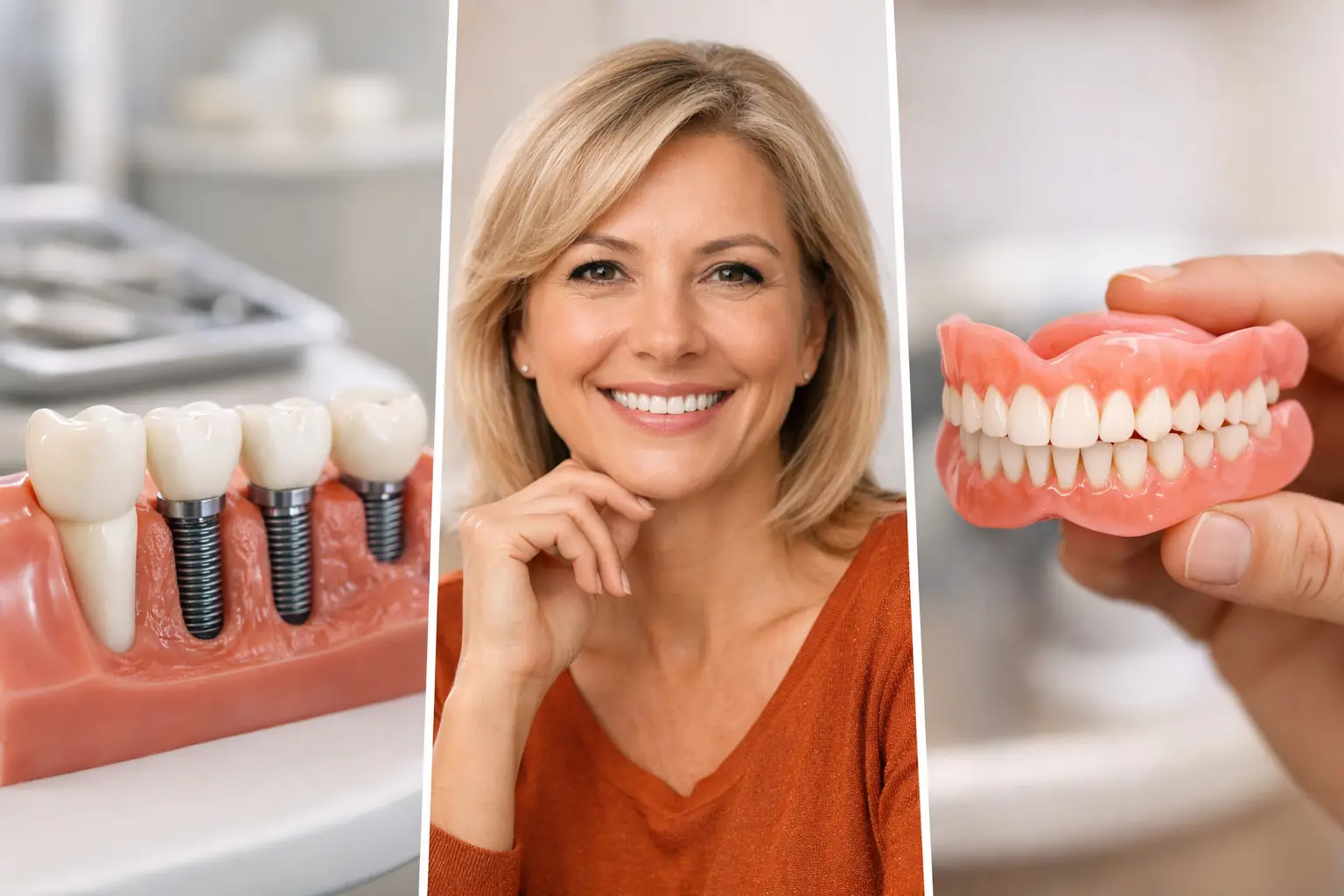
Dentures are removable prosthetic teeth that sit on top of the gums. They can replace a full arch of teeth or, in some cases, several missing teeth. Traditional full dentures rely on the shape of your gums and jaw for support, while partial dentures attach around remaining natural teeth.
Dental implants are small titanium posts placed in the jawbone to act like artificial tooth roots. Once they heal and integrate with the bone, they can support a crown, bridge, or implant-supported denture. Unlike traditional dentures, implants are fixed in place unless your dentist removes a restoration during treatment.
This distinction matters because it shapes almost every other part of the decision. Dentures rest on soft tissue. Implants anchor into bone. That affects stability, comfort, chewing power, and long-term jaw health.
How each option feels in everyday life
For many patients, comfort and confidence matter just as much as cost. Traditional dentures can look natural and restore function well, but they do take some adjustment. They may feel bulky at first, and lower dentures especially can move when talking or eating. Some patients do very well with them. Others never fully like the removable feel.
Implants tend to feel closer to natural teeth because they are secured in the jaw. That extra stability often makes it easier to eat firmer foods and speak without worrying that something will shift. Patients who have struggled with loose dentures often notice a major quality-of-life difference with implant treatment.
That said, implants involve surgery and healing time. Dentures can usually be made faster and with less invasive treatment. If you want the quickest route to replacing teeth, dentures often have an advantage.
Cost matters, and the comparison is not always simple
If you are weighing dental implants vs dentures, cost is probably part of the conversation. Traditional dentures usually have a lower upfront cost. For patients replacing many teeth, that can make them the most accessible starting point.
Implants typically cost more at the beginning because they involve surgical placement, healing, and custom restorations. If bone grafting or extractions are needed first, the total investment can increase further.
But upfront cost is only part of the picture. Dentures often need relines, adjustments, repairs, and eventual replacement as the mouth changes over time. Implants can also require maintenance, but they generally offer more stability and may last much longer with good care. In some cases, a higher initial cost can mean better long-term value.
This is where a personalized exam really matters. Two patients may both be missing teeth, but one might be a straightforward denture candidate while another would benefit more from implants because of bone loss, bite pressure, or trouble keeping removable appliances stable.
Chewing, speech, and confidence
The practical side of tooth replacement shows up fast at mealtimes. Dentures can restore appearance and basic function, but they do not always provide the same bite strength as natural teeth or implants. Sticky foods, hard foods, and foods that require strong front biting can be more difficult.
Implants generally allow for stronger, more secure chewing. Because they are anchored in bone, they do not shift the way removable dentures can. For patients who want to eat a wider range of foods comfortably, that can be a deciding factor.
Speech can also be part of the adjustment. New dentures sometimes affect pronunciation until the tongue and facial muscles adapt. Most people improve with practice, but some remain aware of the appliance. Implant-supported restorations tend to feel more stable during speech, which can help if you are concerned about movement in social or professional settings.
Bone loss and long-term oral health
One of the biggest differences between dentures and implants is what happens under the surface. When a tooth is lost, the jawbone in that area no longer gets the stimulation it once had from chewing. Over time, the bone can shrink.
Traditional dentures do not stop that process. In fact, as the jaw changes shape, dentures may become looser and need to be adjusted or remade. This is one reason some long-term denture wearers notice a change in facial support over the years.
Implants help stimulate the bone in a way that is much closer to a natural tooth root. That can reduce bone loss and help preserve the shape of the jaw. It does not make implants the right answer for everyone, but it is a major benefit, especially for patients thinking beyond the next year or two.
Who may be a good fit for dentures
Dentures are still a very effective treatment for many people. They may be a good option if you are missing multiple teeth, want a non-surgical solution, or need a more budget-conscious way to restore your smile. They can also work well for patients with health conditions that make surgery less ideal.
Some patients choose dentures as a first step and later move to implant-supported treatment. Others are very happy with modern dentures and appreciate that they can restore appearance and function without surgery.
If you have never worn dentures before, it helps to go in with realistic expectations. There is usually an adjustment period. A good fit, follow-up care, and clear guidance from your dental team make a big difference.
Who may be a good fit for dental implants
Implants may be a strong choice if you want a solution that feels more natural, stays firmly in place, and supports long-term bone health. They are often ideal for patients who are tired of loose dentures or who want to replace one or several teeth without a removable appliance.
Good candidates typically need healthy gums and enough bone to support the implant, although bone grafting can sometimes make treatment possible even when bone has already shrunk. Patients also need to be committed to healing time and consistent home care.
For dental-anxious patients, the idea of implant surgery can sound intimidating at first. In practice, many people are surprised that the process feels more manageable than they expected, especially when comfort options and a step-by-step treatment plan are part of the experience.
Implant-supported dentures: a middle ground worth considering
Sometimes the best answer is not either-or. Implant-supported dentures combine features of both treatments. A denture can be attached to implants for much better retention than a traditional removable denture.
This option can be especially helpful for patients who need to replace a full arch of teeth but want more stability without placing an implant for every missing tooth. Depending on the design, the denture may snap in and out for cleaning or be fixed more permanently.
For many patients, this approach balances function, comfort, and cost more effectively than choosing traditional dentures or a full set of individual implants alone.
Questions to ask before you decide
A good consultation should go beyond price. Ask how each option will affect your eating, speaking, cleaning routine, and future oral health. Ask how long treatment will take, whether bone grafting may be needed, and what kind of maintenance to expect in five or ten years.
It is also worth being honest about your lifestyle. If you know you would struggle with removing and cleaning dentures every day, implants may suit you better. If surgery feels like too much right now, dentures may be the more practical next step. There is no one-size-fits-all answer here.
At a practice like Burnaby Square Dental, these conversations are most helpful when they are clear, pressure-free, and tailored to your comfort level. The right recommendation should make sense not only clinically, but also financially and personally.
Choosing between implants and dentures is really about choosing how you want to live with your smile. The best option is the one that fits your health, your priorities, and your daily life well enough that it feels sustainable – not just possible.