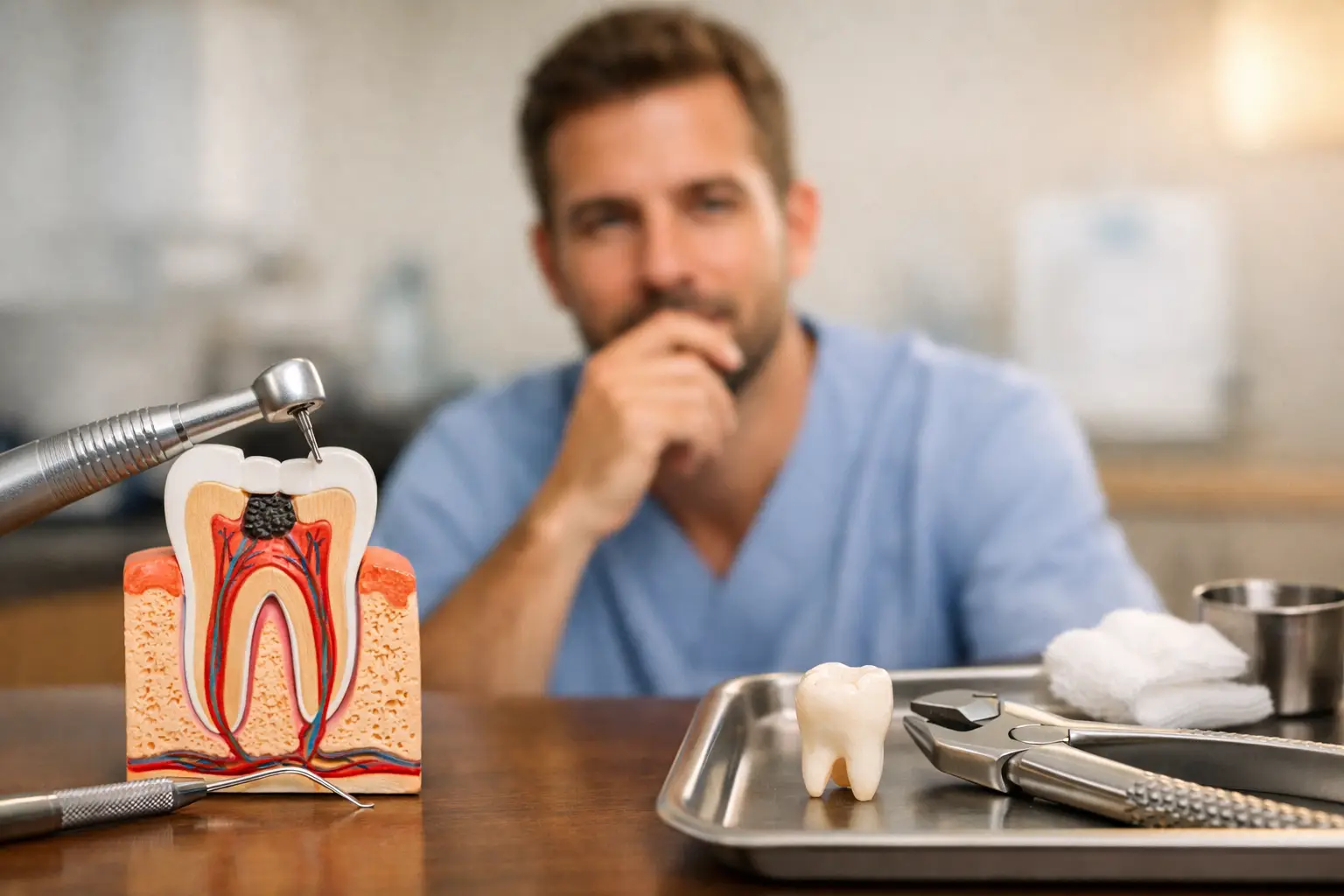
That sharp ache when you bite down, the swelling that seems to come out of nowhere, the tooth that suddenly keeps you up at night – this is usually when the question comes up fast: root canal vs extraction. Most patients are not really asking for a technical explanation. They want to know which option will stop the pain, protect their health, and make the most sense for their life and budget.
The honest answer is that there is no one-size-fits-all choice. In many cases, saving a natural tooth is the better long-term path. In other situations, removing the tooth is the safer, simpler, or more predictable option. The right decision depends on the condition of the tooth, the surrounding bone and gums, your overall oral health, and what happens after treatment.
Root canal vs extraction: the basic difference
A root canal is designed to save a tooth. If the pulp inside the tooth becomes infected or badly inflamed, the damaged tissue is removed, the inside of the tooth is cleaned and sealed, and the tooth is usually restored with a filling or crown. The goal is to keep your natural tooth in place and let you continue using it normally.
An extraction removes the tooth completely. This may be recommended when a tooth is too damaged to restore, has a severe crack below the gumline, has major bone loss, or is causing repeated infection that cannot be managed predictably. Taking the tooth out can solve the immediate problem, but it also creates a gap that often needs to be replaced later with an implant, bridge, or denture.
That next step matters more than many people expect. Extraction is not always the end of treatment. In many cases, it is the beginning of a larger treatment plan.
When saving the tooth is usually worth it
If a tooth can be restored properly, keeping it is often the most conservative option. Your natural tooth root helps maintain normal biting function and supports the bone around it. It also avoids the shifting that can happen when nearby teeth start drifting into an empty space.
A root canal may be a strong choice when the infection is limited to the inside of the tooth, the outer structure is still solid enough for a filling or crown, and the tooth plays an important role in chewing or keeping your bite stable. Molars, for example, often do a lot of work. Saving one can prevent extra stress on the surrounding teeth.
There is also a comfort factor that patients sometimes overlook. While root canals have a reputation for being difficult, modern treatment is typically focused on relieving pain, not causing it. Once the tooth is numb, many patients say it feels similar to getting a deep filling. If dental anxiety is part of the picture, a calm team, clear communication, and sedation options can make a big difference.
When extraction may be the better choice
There are times when removing a tooth is the most sensible option. If decay has destroyed too much tooth structure, if a fracture extends deep into the root, or if advanced gum disease has loosened the tooth significantly, a root canal may not solve the full problem. Saving a tooth only makes sense if it can function well afterward.
Extraction can also be reasonable when the cost to restore a severely damaged tooth is very high and the long-term outlook is poor. For some patients, especially if the tooth is already broken down below the gumline, the more predictable route is to remove it and plan for replacement.
This is where a thoughtful exam matters. A tooth may look saveable at first glance, but an x-ray or 3D image can show hidden fractures, bone loss, or infection patterns that change the recommendation. A good treatment discussion should include not just what can be done, but what is likely to last.
Pain, recovery, and what patients usually feel
One of the biggest fears around root canal vs extraction is pain. Most people want the option that hurts less. The reality is that both procedures are done with local anesthetic, so the goal during treatment is to keep you comfortable.
After a root canal, it is common to feel soreness for a few days, especially if the tooth was badly infected beforehand. That discomfort is usually manageable with routine pain relief and tends to improve steadily. Since the tooth stays in place, healing is often more straightforward than people expect.
After an extraction, recovery can be easy or more involved depending on the tooth and how difficult the removal is. Some extractions are simple. Others, especially when a tooth is broken or the roots are complex, can lead to more swelling and tenderness afterward. If a bone graft is needed to preserve the area for a future implant, that adds another layer to healing.
For anxious patients, the emotional side of treatment matters too. Many people feel more at ease when they know exactly what to expect and have access to options like nitrous oxide or IV sedation if needed.
Cost is not just about today
It is easy to assume that extraction costs less than a root canal, and in the short term, that is often true. But the full comparison is not root canal vs extraction alone. It is root canal and restoration versus extraction and replacement.
A root canal is commonly followed by a crown, especially on a back tooth. That adds to the total cost, but it may preserve the tooth for many years. An extraction may look less expensive upfront, yet replacing the missing tooth with an implant, bridge, or denture can make the overall cost significantly higher.
There are also indirect costs to consider. Leaving a gap untreated can affect chewing, appearance, and how the surrounding teeth function. Over time, that can lead to wear, shifting, or added treatment elsewhere in the mouth.
This is why transparent planning matters. Patients deserve a clear picture of both the immediate fee and the likely next steps, so the decision is based on long-term value, not just the first appointment.
Function and long-term oral health
When a natural tooth can be saved predictably, that often supports better long-term function. Natural teeth are still the best match for your bite. They help distribute chewing forces naturally and preserve the surrounding jawbone through the root.
Once a tooth is extracted, the bone in that area can begin to shrink over time. If the tooth is not replaced, neighboring teeth may tip or drift. The opposite tooth can also move because it no longer has anything to bite against. These changes do not always happen immediately, but they can make future treatment more complicated.
That said, keeping a tooth is not automatically the best choice if the prognosis is weak. A heavily compromised tooth that needs repeated treatment can become more frustrating and more costly than replacing it with a well-planned alternative. Sometimes the healthiest decision is to stop trying to save a tooth that has little chance of lasting.
Root canal vs extraction for different situations
Front teeth are often strong candidates for root canal treatment if the outer tooth can still be restored. Saving a front tooth can be especially valuable for appearance and speech. Back teeth can also be worth saving, but the final choice depends on how much healthy structure remains and whether a crown can protect it.
For patients with advanced gum disease, the issue may not be the nerve inside the tooth at all. If the supporting bone is badly reduced, even a technically successful root canal may not save the tooth long term. In that case, extraction may be more realistic.
If you already have crowding, missing teeth, or a larger restorative plan underway, that can influence the decision too. Sometimes removing one tooth fits into a broader treatment strategy. Other times, preserving the tooth avoids more extensive work later.
What to ask before deciding
A good consultation should leave you feeling informed, not rushed. Ask whether the tooth can be restored predictably, what kind of restoration will be needed afterward, and what the long-term success rate looks like in your specific case. It also helps to ask what happens if you choose extraction and do not replace the tooth right away.
You should also feel comfortable asking about comfort options, recovery time, insurance coverage, and whether there are alternatives based on your budget. At a patient-focused practice like Burnaby Square Dental, these questions are part of the treatment conversation, not an afterthought.
The best dental decisions are rarely about fear or guesswork. They come from understanding the trade-offs clearly enough to choose what fits your health, your priorities, and your future.
If you are facing root canal vs extraction, try not to think of it as choosing the faster fix. Think of it as choosing the path that gives your mouth the best chance to stay healthy, comfortable, and functional for years to come.