Missing a tooth can change more than your smile. It can make chewing feel awkward, affect speech, and leave you wondering whether the space will cause bigger problems later. When patients ask about dental bridge vs implant options, they usually want a clear answer to one question: which one is better for real life?
The honest answer is that it depends on your goals, your oral health, your timeline, and your budget. Both treatments can replace a missing tooth beautifully. Both can restore confidence. But they work in very different ways, and those differences matter.
Dental bridge vs implant: the basic difference
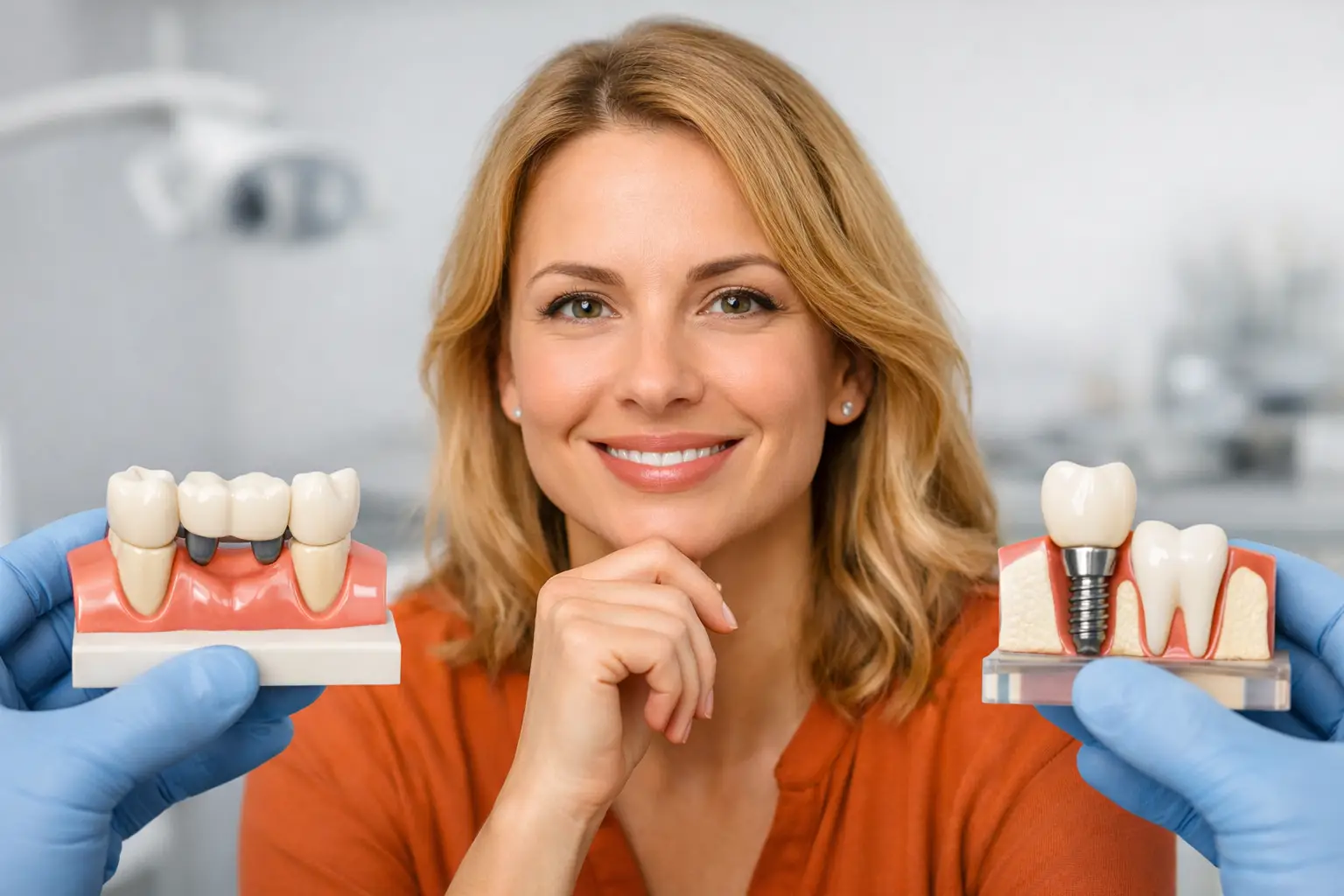
A dental bridge fills the gap by attaching an artificial tooth to the teeth next to the missing space. In most cases, the neighboring teeth are shaped and fitted with crowns that support the replacement tooth in between.
A dental implant replaces the tooth root as well as the visible tooth. A small titanium post is placed in the jawbone, where it heals and bonds with the bone. After that, a crown is attached on top to complete the restoration.
That distinction is the reason implants and bridges feel different in terms of longevity, maintenance, and planning. A bridge relies on nearby teeth for support. An implant stands on its own.
When a dental bridge makes sense
A bridge can be a very good option when you want a fixed replacement without surgery. For many patients, that is the biggest advantage. If the neighboring teeth already need crowns because of large fillings, cracks, or wear, a bridge may solve two problems at once.
Bridges can also be a practical choice when you want a shorter treatment timeline. In many cases, the process is more straightforward than implant treatment. If you are dealing with a visible missing tooth and want to restore your smile sooner, that can be appealing.
Cost is another reason some patients lean toward a bridge. The upfront fee is often lower than an implant, especially if bone grafting or other surgical steps would be needed for implant placement.
That said, a bridge does have trade-offs. Because it depends on the neighboring teeth, those teeth take on extra responsibility. They may need to be reduced even if they are otherwise healthy. Over time, the bridge can also be harder to clean underneath, which means home care and regular dental visits really matter.
When a dental implant makes sense
An implant is often the closest replacement to a natural tooth because it restores support below the gums as well as above them. That can help preserve the jawbone and reduce the bone shrinkage that often happens after tooth loss.
Many patients like that an implant does not require reshaping the teeth beside the gap. If the adjacent teeth are healthy, keeping them untouched is a major advantage.
Implants also tend to feel stable and independent. You brush and floss them similarly to natural teeth, and there is no false tooth suspended between crowns. For someone thinking long term, that can make an implant feel like a more natural investment.
But implants are not always the quickest route. They require surgery, healing time, and enough bone support. Some patients need bone grafting before or during treatment. If you are anxious about procedures, the idea of implant surgery may feel intimidating, although sedation and gentle care can make the experience much easier than many people expect.
Cost: upfront vs long-term value
Cost is often the first concern, and understandably so. A bridge usually costs less at the beginning. If you are comparing estimates and trying to make a decision based on immediate affordability, the bridge may look like the easier answer.
An implant often costs more upfront because it includes the surgical placement, healing phase, and final crown. If bone grafting is needed, that adds to the overall fee.
Still, the long-term picture can be different. Bridges may need replacement after years of wear, especially if the supporting teeth develop decay, cracks, or gum problems. Implants can also require maintenance, and no dental treatment lasts forever, but they often perform very well over the long term when placed properly and cared for consistently.
So the better value is not always the lower starting cost. It depends on your oral health, age, habits, and how long you want the solution to last.
Appearance and comfort
Both bridges and implants can look very natural when designed well. The final appearance depends on the shape of the restoration, the materials used, and how it fits with your bite and gumline.
In terms of comfort, many patients do very well with either option. A bridge feels fixed in place and does not come out, which people appreciate. An implant often feels even closer to a natural tooth because it is anchored in the bone rather than connected to other teeth.
One subtle difference is what happens under the gumline over time. Because an implant stimulates the jawbone, it may do a better job of maintaining the natural contours of the area. A bridge replaces the visible gap, but it does not prevent bone loss where the root used to be.
Healing time and treatment timeline
If speed matters most, a bridge is often faster. After preparation of the supporting teeth, the restoration can typically be completed in a relatively short number of visits.
Implants take more patience. After the implant is placed, the bone usually needs time to heal around it before the final crown goes on. That healing period can vary depending on the case.
For some patients, the slower timeline is worth it because of the long-term benefits. For others, especially if they want a more immediate solution, a bridge may fit better. This is one of those areas where personal priorities really shape the right answer.
What about bone health?
This is where implants have a clear advantage. When a tooth is lost, the jawbone in that area no longer gets the same stimulation from chewing. Over time, the bone can shrink.
A bridge does not replace the root, so it does not stop that process. An implant functions more like a root and helps support the bone. That can be especially important if you want to preserve facial structure and keep future treatment options open.
Not everyone is automatically a candidate for an implant, though. If bone loss has already occurred, extra treatment may be needed before placement. A full exam and imaging are the best way to know what is realistic.
Dental bridge vs implant for different patients
A younger adult with healthy neighboring teeth may prefer an implant because it preserves those teeth and supports the bone for years ahead. A senior patient may also be a strong implant candidate, but overall health, medications, and healing ability need to be considered.
A bridge may be ideal for someone who wants a fixed restoration without surgery or needs a faster solution. It can also make practical sense when the teeth next to the gap already need crowns.
For patients with dental anxiety, the choice is not just clinical. Comfort matters. Some people feel better avoiding surgery. Others prefer the implant route once they learn that sedation options, local anesthetic, and careful planning can make treatment feel controlled and manageable.
This is why a one-size-fits-all recommendation is rarely the right approach.
Questions worth asking before you decide
If you are choosing between these treatments, ask how healthy the teeth beside the gap are, whether you have enough bone for an implant, how each option affects cleaning at home, and what the likely maintenance looks like over the next ten years.
You should also ask about total treatment time, not just the first appointment. A quick fix is not always the best fit, and a longer process is not always the better one either. The right option is the one that fits your mouth and your life.
At a full-service practice like Burnaby Square Dental, these decisions can be made with the bigger picture in mind, including gum health, bite alignment, comfort needs, and whether sedation would help you feel more at ease during treatment.
So which one should you choose?
If your top priorities are preserving bone, protecting nearby healthy teeth, and investing in a long-term solution, an implant is often the stronger option. If your priorities are avoiding surgery, reducing upfront cost, or restoring the area more quickly, a bridge may be the better fit.
Neither treatment is automatically right just because it is newer, faster, or more affordable. Good dentistry is about matching the solution to the person sitting in the chair.
A missing tooth does not have to stay an open question. With the right exam, a clear conversation, and a plan that respects both your health and your comfort level, the next step can feel a lot less overwhelming.